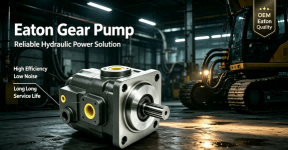
Eaton Gear Pump Features, Selection, Faults and Maintenance Comprehensive Solution
The Eaton gear pump is a highly recognized and highly stable heavy-duty quantitative hydraulic pump in the global fluid power field. As a core product of the international top hydraulic brand Eaton Hydraulics, the Eaton gear pump, with its robust industrial-grade structure, ultra-high pressure resistance, excellent anti-pollution ability, extremely low failure rate and extremely long service life, is widely used in construction machinery, agricultural equipment, logistics handling vehicles, industrial hydraulic systems and special engineering vehicles. Whether it is for original equipment matching or equipment after-sales replacement, the Eaton gear pump is the mainstream preferred solution for medium and heavy-duty hydraulic equipment, and it has an extremely high market share and reputation in the global hydraulic market.
Compared with ordinary domestic and non-brand gear pumps on the market, the Eaton gear pump adopts stricter industrial-grade R&D and manufacturing standards, equipped with heat-treated precision gears, floating pressure compensation bushings, high-strength cast iron housings, and multi-layer sealing protection structures. Multiple advanced designs enable the product to easily cope with 24-hour continuous operation, harsh dust conditions, temperature differences between hot and cold, frequent start-stop, etc. It still maintains high efficiency and stability during long-term operation, with extremely low internal leakage and superior comprehensive performance compared to ordinary gear pumps.
I. Working Principle of Eaton Gear Pump
The Eaton gear pump is a type of externally meshing constant-volume hydraulic pump. Its core structure includes the driving gear, driven gear, pump body housing, floating pressure compensation bushing, front and rear end covers, main shaft oil seal, installation flange, etc. The equipment is driven by the motor to rotate the gear shaft. Through the meshing and separation of the gears, the internal volume of the pump chamber is continuously changed, thereby completing the complete hydraulic power transmission process of oil suction and oil pressure application.
On the oil suction side, the gear teeth are separated from each other, and a negative pressure vacuum is formed inside the pump chamber, drawing the hydraulic oil from the oil tank into the pump body. On the oil pressure application side, the gear teeth are closely meshed, squeezing the hydraulic oil in the pump chamber to form high pressure, continuously delivering stable pressure and flow of hydraulic oil to the hydraulic system, providing power for the equipment's actuating mechanisms.
The most core and exclusive technology of the Eaton gear pump is the floating pressure balance bushing system, which is a key advantage differentiating it from ordinary gear pumps. During operation, the high-pressure oil at the outlet will push the bushing to automatically adhere to the gear end face, dynamically compensating for the mating clearance generated by the gear rotation, fundamentally reducing internal leakage. Even after running for tens of thousands of hours, it can still maintain an extremely high volumetric efficiency and will not experience the rapid decline in efficiency and insufficient pressure problems that occur in ordinary gear pumps.
2.Detailed Explanation of Eaton Gear Pump Product Series
Eaton has developed a complete range of gear pump products to meet different working conditions such as light load, medium load, heavy load, quiet operation, and lightweight. The product series cover all pressure levels, all displacement ranges, and all scenarios, with a well-structured model system and excellent adaptability.
1. Classic Standard Series 26000/27000
The 26000 and 27000 series are Eaton's most classic, most widely used, and most versatile standard gear pump series. This series is technologically mature, stable in performance, has a complete range of models, and is convenient for after-sales replacement. They are benchmark models in the field of construction machinery. The product displacement ranges from 2cc/r to 80cc/r, and the continuous stable working pressure can reach 210–240bar. The instantaneous peak pressure is higher, and it supports single pump, double pump, and multi-pump combinations.
They are widely used in auxiliary hydraulic systems of excavators, working pumps and steering pumps of loaders, road construction machinery, general industrial hydraulic stations, etc. The global spare parts supply chain is complete, and procurement is convenient. They are the preferred mainstream models for equipment maintenance and replacement.
2. PGP Heavy Load High Pressure Series
The PGP series is Eaton's heavy-duty gear pump specifically developed for harsh heavy-duty working conditions. It is positioned for high-end heavy-duty scenarios. It features a thickened and high-strength cast iron pump body, reinforced and thickened gear shafts, and upgraded pressure-resistant bushing structure. The overall structure's rigidity is significantly improved, and its anti-shock and anti-overload capabilities are extremely strong. The maximum working pressure of this series can reach 276bar, making it the most pressure-resistant product in Eaton's gear pump series.
The PGP series supports single pump, double pump, and triple pump combinations, enabling multi-loop independent oil supply, perfectly adapting to large combine harvesters, road rollers, asphalt pavers, and mining auxiliary equipment that require long-term full-load, high-intensity continuous operation.
3. G2/G3 High Efficiency Quiet Series
The G2 and G3 series are upgraded high-performance gear pumps, focusing on high efficiency, energy saving, low noise, and low vibration. The brand adopts exclusive optimized involute tooth shape and dynamic flow balance design, effectively reducing gear meshing impact and flow pulsation, significantly reducing operating noise and vibration from the structural perspective.
Compared to traditional gear pumps, the G2/G3 series operate more smoothly, have lower heat generation, and have higher volumetric efficiency. They are less prone to high-temperature degradation during long-term operation. They are mainly suitable for high-precision industrial hydraulic equipment, aerial work platforms, automated production lines, and precision logistics machinery, which have strict requirements for vibration, noise, and stability.
4. AL Lightweight Aluminum Alloy Series
The AL series is an economical lightweight gear pump, using an aluminum alloy integrated pump body, featuring light weight, small size, convenient installation, and high cost performance. The product's pressure-bearing capacity is moderate, the structure is compact, and it is suitable for small lightweight hydraulic equipment, requiring no installation space.
It is widely used in small forklifts, sanitation vehicles, micro hydraulic power units, and light industrial automation equipment, providing a cost-effective solution for small hydraulic systems.
5. Eaton Dual Pump Series
The Eaton dual pump integrates two pump cores into the same pump body, enabling dual oil circuits for independent supply, outputting low-pressure high-flow and high-pressure low-flow. It precisely matches the working logic of construction machinery's "fast feed low-pressure high-flow, operation advance high-pressure low-flow", significantly improving equipment operation efficiency and effectively reducing system energy consumption. The energy-saving effect is remarkable. It is the core hydraulic component for engineering equipment.
3. Core Advantages of Eaton Gear Pumps
- Exceptional heavy-duty durability: Utilizing heat-treated precision alloy gears and thickened cast iron pump bodies, it can withstand mechanical shocks, high-frequency vibrations, dust erosion, and temperature variations in high and low temperatures. It can operate stably and continuously for a long time in outdoor construction sites, farmlands, and harsh industrial environments, with an extremely low failure rate.
- Patented floating bushing pressure compensation technology: Relying on Eaton's exclusive pressure compensation structure, it automatically and dynamically compensates for the gap between gears, minimizing internal leakage and causing minimal efficiency degradation over time. This completely resolves the common problems of insufficient pressure and sluggish operation after gears wear in ordinary gear pumps.
- Excellent resistance to oil contamination: Different from the strict cleanliness requirements of vane pumps, Eaton gear pumps have extremely strong tolerance for slightly contaminated hydraulic oil. They are suitable for harsh working conditions in construction sites with much dust and easily contaminated oil, significantly reducing the probability of equipment failures.
- Low heat generation, capable of continuous operation 24/7: Optimizing the gear meshing structure, it reduces mechanical friction loss, and the pump body generates little heat during operation. It supports 24-hour uninterrupted continuous operation and will not experience high-temperature failures or oil deterioration due to long-term overflow or load operation.
- Modular customization, highly adaptable: Supports various types of shafts (such as spline shafts and flat key shafts), multiple flange specifications, forward and reverse rotation switching, and multi-directional oil port layouts. It can be equipped with an overflow valve component, allowing for direct replacement of new and old equipment without the need for modifying the frame structure.
- Global comprehensive after-sales service system: The product model has a high degree of standardization, with a complete range of models, sufficient global spare parts inventory, short supply cycle, low maintenance cost, and perfect compatibility for long-term equipment operation and daily maintenance.
- Outstanding cost-effectiveness in heavy-duty conditions: Compared to high-pressure piston pumps, Eaton gear pumps have a simpler structure, lower failure rate, easier maintenance, lower procurement cost, and are the most cost-effective hydraulic power solution for medium and high-pressure heavy-duty conditions.
4. Weaknesses and Limitations of the Product
- Quantitative structure, no automatic flow regulation function: The Eaton gear pump is a fixed-displacement pump and cannot automatically adjust the output flow according to the load like variable piston pumps or variable vane pumps. Energy-saving hydraulic systems need to be supplemented with flow control valves.
- Higher operating noise than silent vane pumps: Even though the G2/G3 series has undergone noise reduction optimization, the gear meshing structure still has inherent noise, and it is not suitable for ultra-quiet conditions such as laboratories and precision dust-free workshops where noise sensitivity is extremely high.
- Not applicable to ultra-high pressure extreme conditions: When the system operates at a pressure exceeding 280 bar for a long time, the wear rate of gears and bushings will significantly increase, and the service life will decline significantly. Ultra-high pressure heavy-duty equipment should use axial piston pumps.
5. Extensive Application Scenarios
The Eaton gear pump is suitable for the majority of heavy-duty hydraulic applications and covers all aspects of engineering, agriculture, logistics, industry, and special vehicles. It is a universal core component for hydraulic equipment worldwide.
- Construction machinery: Mini excavators, wheel loaders, mining and loading excavators, road rollers, asphalt pavers, compactors, vehicle steering and auxiliary hydraulic systems for construction.
- Agricultural machinery: Large tractors, combine harvesters, straw baling machines, agricultural cranes, agricultural irrigation hydraulic pumping stations.
- Logistics and handling equipment: Electric forklifts, diesel forklifts, aerial work platforms, stackers, container handling equipment, warehouse lifting systems.
- Industrial hydraulic systems: Hydraulic presses, automated production lines, conveying equipment, packaging machinery, general industrial hydraulic power units.
- Special vehicles: Sanitation cleaning vehicles, garbage transfer vehicles, fire trucks, rescue vehicles, military vehicles with hydraulic control systems.
- Vehicle-mounted auxiliary equipment: Vehicle-mounted hydraulic systems, engineering modified hydraulic units, mobile lifting operation equipment.
6. Eaton Gear Pump Professional Selection Guide
1. Pressure Selection Criteria
When selecting, the rated pressure should be reserved with a safety factor of 1.2-1.3 to avoid long-term overpressure and overload wear. For conventional medium-pressure equipment below 240 bar, the 26000/27000 standard series is preferred; for heavy-duty high-pressure equipment with a working pressure close to 270 bar, the PGP heavy-duty special series is selected.
2. Displacement and Flow Calculation
Flow calculation formula: Flow (L/min) = Displacement (ml/r) × Motor speed (rpm) ÷ 1000. Based on the equipment's operating speed and operational efficiency requirements, select the corresponding displacement. Strictly follow the official recommended speed range and do not operate at excessive speed for a long time to avoid premature wear and failure of parts.
3. Structural Form Selection
For single independent hydraulic oil circuits, conventional operation equipment selects a single pump; for construction machinery requiring rapid low-pressure high-flow feed and high-pressure low-flow operation, the dual-stage gear pump is preferred, balancing operational efficiency and energy-saving effects.
4. Operating Conditions and Noise Compatibility Selection
For outdoor engineering and agricultural open-air harsh conditions, the PGP and 27000 series with stronger durability are preferred; for indoor precision automation equipment and quiet scenarios, the G2/G3 high-efficiency silent series with low noise and stable performance is selected.
5. Installation Parameter Verification
Before replacement, it is essential to verify the pump shaft spline specification, flange installation form, oil port thread standard, rotation direction, and installation hole position to ensure 100% direct replacement without modifying the equipment frame and piping.
7. Common Faults, Causes and Solutions
1. Insufficient pressure, equipment becomes sluggish and slow in operation
Fault causes: Excessive wear and gap between gears and bushings, severe internal leakage, air leakage in the suction pipeline, clogging of the suction filter element, deterioration and contamination of the hydraulic oil.
Solution: Completely replace with new hydraulic oil and filter elements; thoroughly inspect the suction pipeline, seal off the leakage points; replace the worn gears and bushing components, restore the pump body's volumetric efficiency and pressure performance.
2. Abnormal noise during operation, severe vibration of the equipment
Fault causes: Air mixed into the hydraulic oil, abnormal gear meshing, wear and looseness of bearings, deviation in the coaxiality of the pump and motor coupling, entry of impurities and foreign objects into the pump body.
Solution: Completely evacuate the internal air in the hydraulic system; re-align the pump and motor coaxially; replace damaged bearings and worn components; disassemble and clean the pump body, remove internal impurities.
3. Pump body overheating, abnormal increase in oil temperature
Fault causes: Long-term full-pressure overflow unloading in the system, severe internal leakage, blocked cooling device with poor heat dissipation, mismatch in hydraulic oil viscosity selection for the working conditions.
Solution: Reasonably adjust the overflow pressure of the system to avoid long-term overload unloading; replace worn internal leakage components; clean and unclog the hydraulic cooling device; replace with Eaton's recommended specification hydraulic oil.
4. External leakage of oil from the pump body
Fault causes: Aging and failure of the main shaft oil seal, cracking and damage of the O-ring, uneven tightness of the end cover bolts, damage to the sealing surface due to contamination.
Solution: Replace the complete set of sealing components (oil seal, O-ring, gasket); evenly tighten the end cover bolts diagonally; clean and grind the sealing surface to remove impurities, ensuring a tight fit.
5. Gradual decrease in flow rate and efficiency after long-term use
Fault causes: Natural wear of the floating bushing and gear teeth, gradual increase in internal clearance, continuous increase in internal leakage.
Solution: Regularly disassemble and inspect the pump according to the maintenance schedule, replace worn bushings and gear components in time, restore the original working performance of the pump body.
8. Complete Daily Maintenance and Overhaul Procedures
- Daily Startup Inspection: Before each startup, check if the oil level in the tank is sufficient, the condition of the oil, the sealing of the suction pipeline, and whether there is any leakage of oil or oil seepage from the pump body. Only after confirming there are no issues can the machine be started.
- Regular Oil and Filter Replacement: Every 500-800 hours of operation, replace the hydraulic oil and the complete set of filters to prevent the oil from being contaminated by impurities and wear out the gears and bushings.
- Prevent Air Ingress in the Oil Path: Air ingress is the biggest potential hazard for the gear pump, which can directly cause cavitation, abnormal noise, vibration, and rapid wear. The suction pipeline must be kept tightly sealed throughout the process.
- Avoid Long-Term Standby with Full Pressure: Long-term operation at full pressure will cause the pump body to heat up rapidly and accelerate the aging of internal parts, significantly shortening the service life.
- Regular Cleaning of the Pump Body: Clean the oil stains, dust, and dirt on the surface of the pump body in a timely manner to ensure smooth heat dissipation. Special attention should be paid to outdoor construction machinery.
- Standardized Overhaul Period: After the equipment has accumulated a total of 2000-2500 hours of operation, conduct a complete disassembly and overhaul, replace all worn parts and seals, and fully restore the equipment's performance.
 WhatsApp
 Email
Email
 +86 19918575358