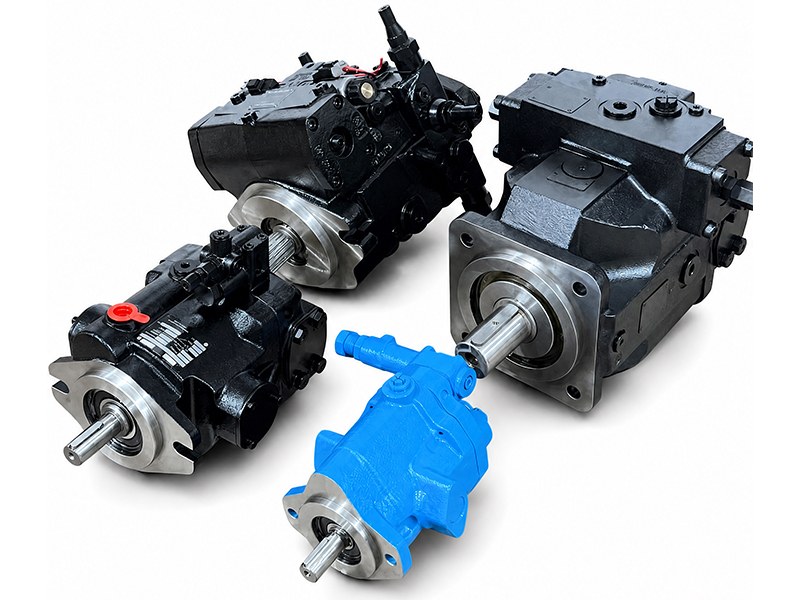
Piston Pumps in Stock
Piston pumps are positive-displacement hydraulic pumps that use the reciprocating motion of pistons within cylinders to pressurize and move hydraulic fluid. Known for their high efficiency and exceptional pressure capability, piston pumps are the preferred choice for demanding hydraulic systems that require high power density, precise control, and variable displacement. Our comprehensive inventory spans axial and radial piston pump configurations, including fixed and variable displacement models, engineered for heavy-duty mobile and industrial applications.
Hengyuhang combines robust manufacturing capacity with specialized engineering expertise to produce high-performance piston pumps. Manufactured to stringent international quality standards, our piston pumps deliver the reliability, efficiency, and long service life required to serve as direct, drop-in replacements for leading international brands. When standard equipment cannot meet specific technical demands, our facility designs and manufactures entirely custom piston pump solutions — from rapid prototyping to full-scale production — engineered strictly to your operational parameters and application needs.
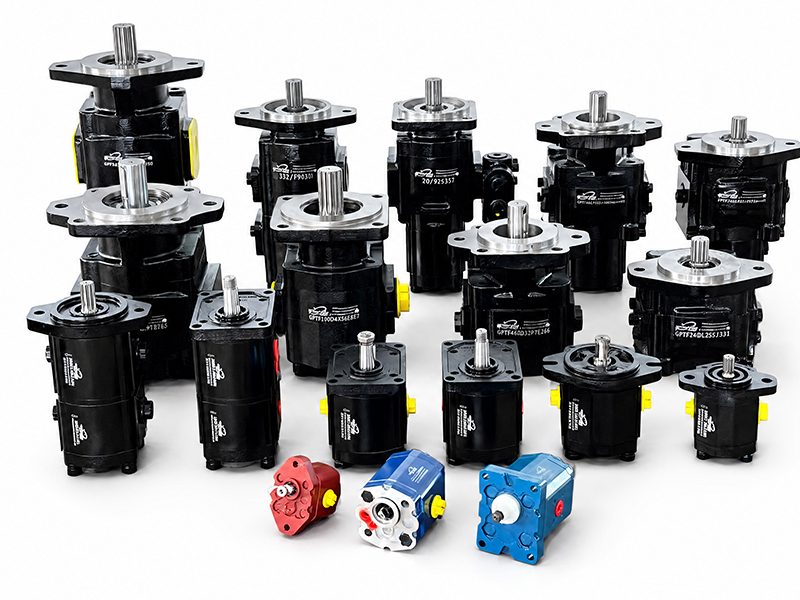
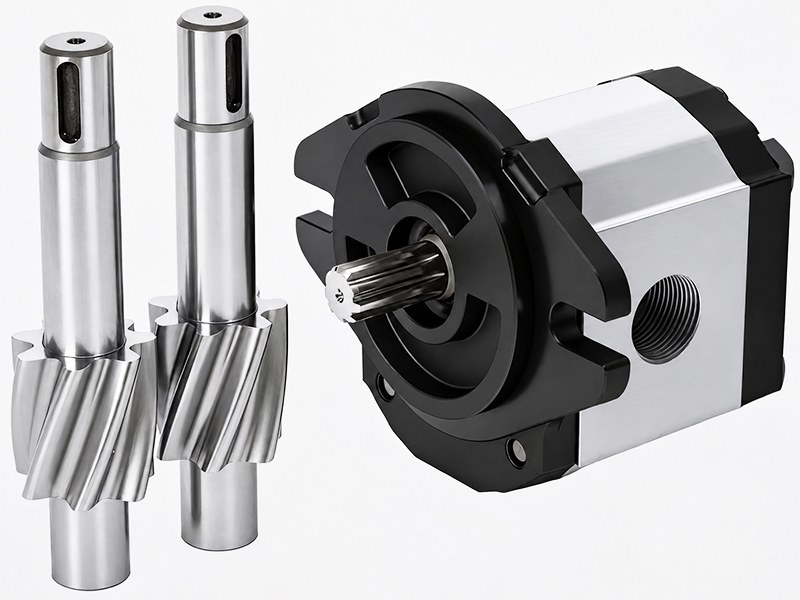
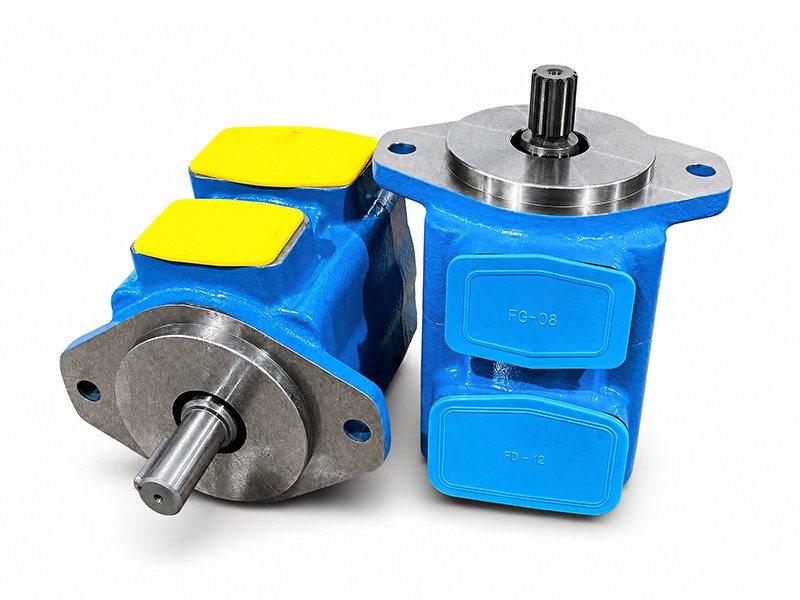
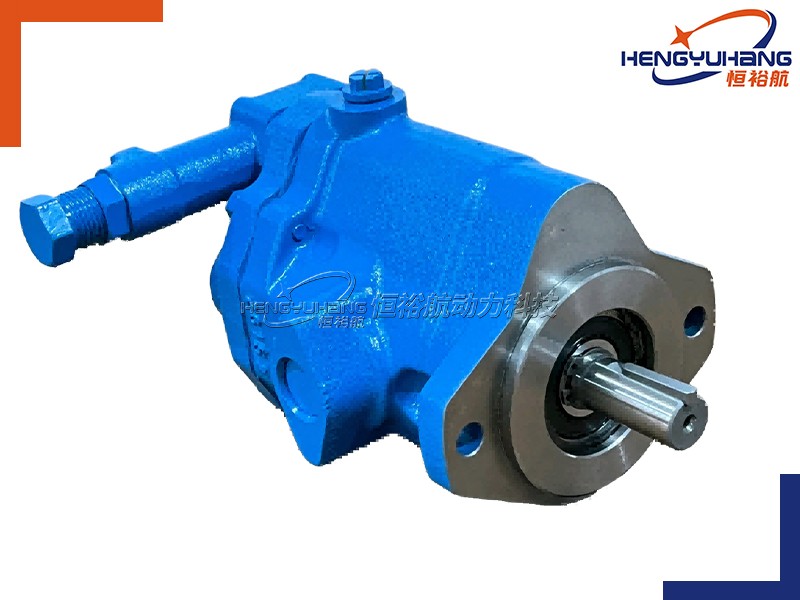
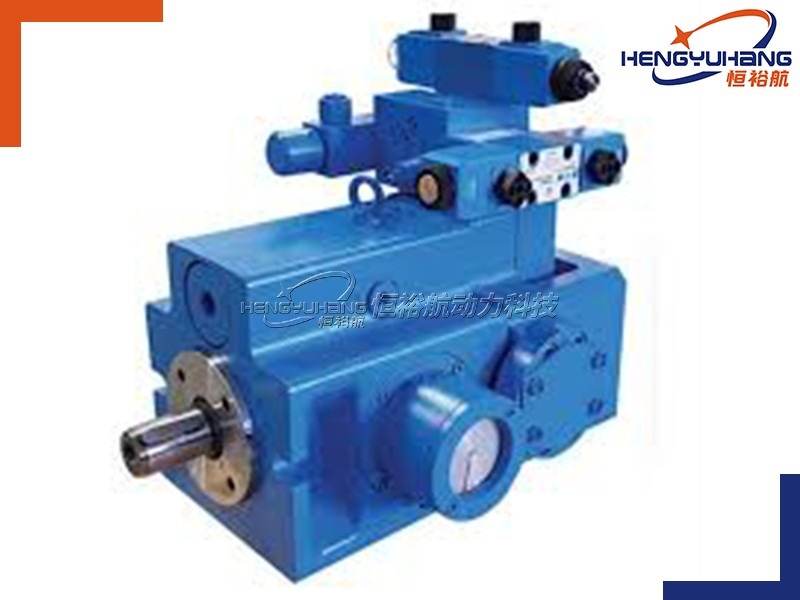
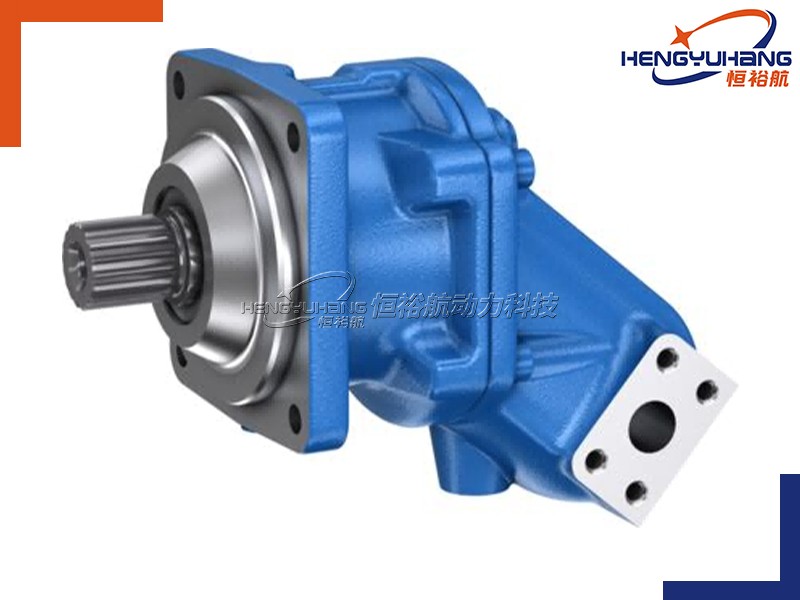
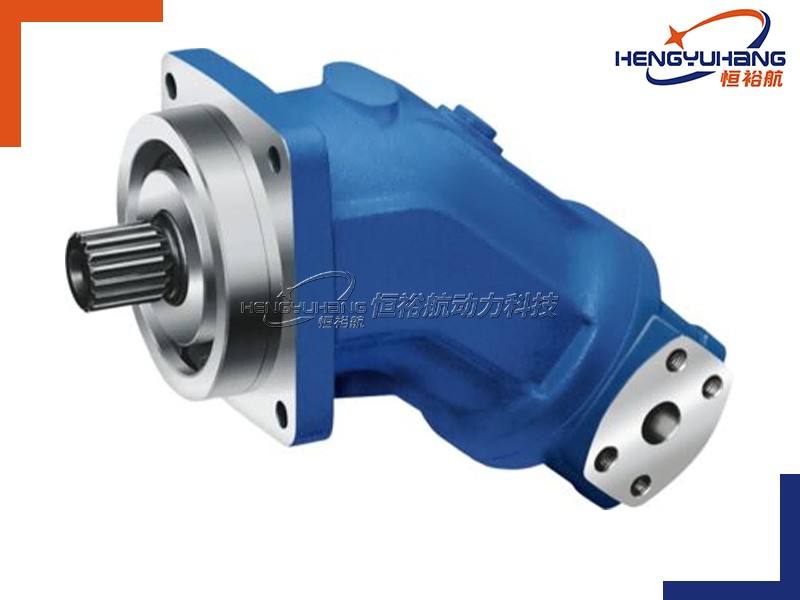
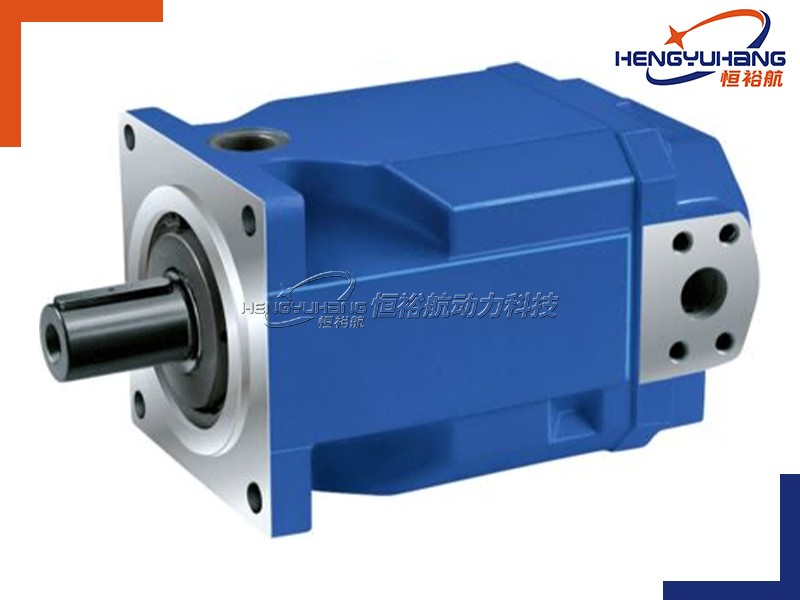
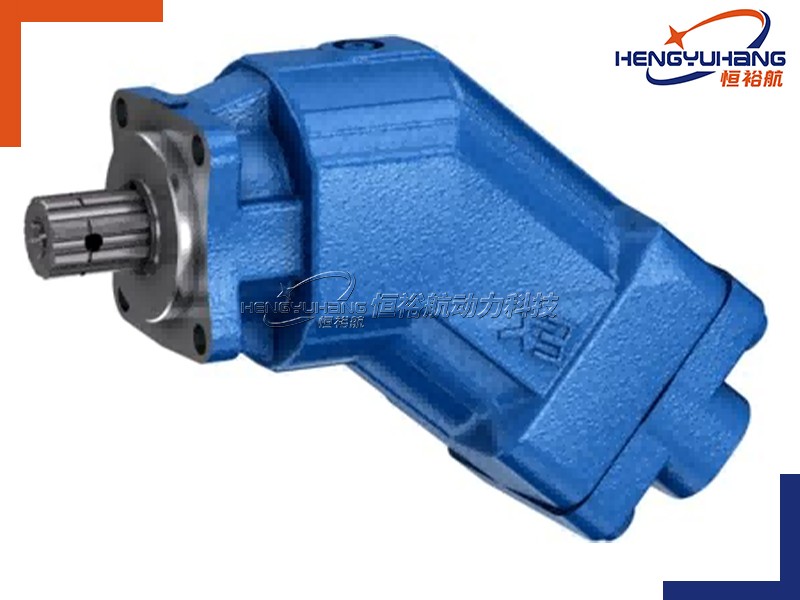
High-Performance Hydraulic Piston Pumps | Axial & Radial Engineered Solutions | Direct OEM Replacement & Custom Manufacturing
1. What Is a Piston Pump?
A hydraulic piston pump is an advanced positive-displacement fluid power unit engineered to deliver high working pressure, exceptional volumetric efficiency, and micro-precise flow control under continuous, heavy-duty duty cycles.
Operating Mechanism: Unlike gear or vane mechanisms, a piston pump generates fluid flow through the coordinated reciprocating (stroke) movement of multiple high-strength pistons sliding inside precision-bored cylinder chambers:
• The Suction Stroke: As the cylinder block rotates, an angled drive mechanism (such as a swashplate, bent-axis drive plate, or eccentric cam) pulls the pistons outward, expanding the cylinder chamber volume and drawing hydraulic fluid in through the intake valve plate.
• The Discharge Stroke: As rotation continues, the angled plate forces the pistons back into their bores, compressing the fluid and forcing it out under high pressure into the hydraulic system.
Why Piston Pumps Are the Benchmark for Heavy-Duty Hydraulics:
• Unrivaled Pressure Thresholds: Designed to handle severe pressure regimes where gear and vane pumps reach structural limits.
• Superior Volumetric Efficiency (Up to 95%+): Micro-finished piston-to-bore clearances and hydrostatic balancing minimize internal fluid bypass across the entire operating pressure range.
• Intelligent Variable Control: Capable of dynamically modulating displacement from zero to maximum output to match instantaneous machine load demand, drastically cutting energy consumption and system heat generation.
2. Types of Piston Pumps: Architectural Configurations
Piston pumps are classified into two primary architectural families based on the geometric orientation of their pistons relative to the drive axis:
① Axial Piston Pumps (The Pinnacle of Variable-Flow Precision)
Configuration: Pistons are arranged parallel to the input drive shaft within a rotating cylinder block.
Swashplate Design: The cylinder barrel rotates against an adjustable-angle swashplate. Altering the swashplate tilt angle dynamically controls the stroke length of the pistons, enabling smooth, continuous variable displacement.
Bent-Axis Design: The drive shaft and cylinder barrel are arranged at an angle relative to one another (fixed or variable), offering exceptional mechanical efficiency and high rotational speed tolerance.
Key Strengths: High power-to-weight ratio, broad displacement adjustability, high operating speed capabilities, and seamless integration with complex hydraulic control manifolds.
Primary Applications: Primary closed-loop and open-loop drive circuits in mobile heavy machinery (excavator travel and swing drives, wheel loaders, mobile cranes), hydrostatic transmissions, and large industrial power units.
② Radial Piston Pumps (Extreme Pressure & Uncompromising Durability)
Configuration: Pistons are arranged radially (perpendicular to the drive shaft), extending outward like spokes on a wheel around a central eccentric camshaft.
Key Strengths: Exceptional structural rigidity, high operational reliability under extreme pressure peaks, high efficiency at low rotational speeds, and exceptional longevity when operating with synthetic or low-lubricity fluids.
Primary Applications: Heavy-duty metal forging and stamping presses, plastic injection clamping units, high-pressure test stands, machine tool feeds, and offshore winches requiring extreme pressure reliability.
Displacement & Advanced Control Options:
• Fixed vs. Variable Displacement: Fixed-displacement models for continuous-output power packs; variable-displacement models for energy-efficient on-demand flow control.
• Comprehensive Control Modalities:
— Pressure Compensator Control: Automatically destrikes the pump to maintain a preset maximum system pressure, eliminating excess heat and relief-valve dumping.
— Load Sensing (Flow & Pressure Compensation): Monitors actuator load demand via an external sensing line and modulates flow and pressure accordingly for maximum fuel efficiency.
— Electronic Proportional Control: Microprocessor-controlled proportional displacement via analog or digital signals (CAN bus, 4–20 mA, 0–10 V) for automated machinery.
3. High-Demand Industry Applications
Engineered to operate reliably under severe pressure spikes, continuous thermal loads, and rigorous duty cycles, our piston pumps power critical equipment worldwide:
Construction & Earthmoving Machinery: Main hydraulic pumps, auxiliary pumps, and travel/swing drives in crawler excavators, mobile cranes, wheel loaders, and horizontal directional drilling (HDD) rigs.
Agricultural & Forestry Machinery: Load-sensing main hydraulic systems in heavy-duty tractors, combine harvesters, forestry forwarders, and timber harvesting heads.
Mining & Heavy Industrial Equipment: Underground mining haulers, surface drill rigs, heavy tunneling boring machines (TBM), and rock-crushing hydraulic plants.
Marine, Offshore & Deck Machinery: Anchor handling winches, subsea cranes, offshore drilling platform power packs, and hydraulic marine steering gearboxes.
Industrial Presses & Machine Tools: High-tonnage hydraulic forging presses, plastic injection molding machines, die-casting machinery, and automated metal scrap balers.
Wind Energy & Power Generation: Wind turbine pitch control mechanisms, hydraulic braking systems, and turbine rotor-locking units.
High-Pressure Mobile Hydraulics: Concrete pump trucks, heavy-duty mining dumpers, and custom multi-actuator mobile platforms requiring high-power density.
4. Key Performance Features & Engineering Advantages
Industry-Leading Volumetric & Mechanical Efficiency: Hydrostatically balanced piston shoes and micro-lapped bimetallic valve plates ensure minimal friction and virtually zero internal leakage, delivering higher hydraulic power output per kilowatt of engine power.
Extreme Continuous & Peak Pressure Endurance: Solid one-piece forged cylinder blocks and case-hardened alloy pistons engineered to withstand continuous pressures up to 400 bar and transient peak spikes up to 450 bar.
Precise, On-Demand Variable Flow Modulation: Highly responsive control mechanisms adjust swashplate angles within milliseconds, reducing engine fuel consumption and prolonging hydraulic fluid life.
Ultra-Durable Tribological Pairings: Specially coated valve plates, bronze-bushed cylinder barrels, and hardened alloy pistons resist cavitation, thermal expansion, and mechanical wear.
Standardized International Mounting Standards: Fully compliant with SAE and ISO mounting standards (flanges, shafts, and ports) for 100% plug-and-play drop-in installation on existing machinery.
100% Quality Bench Validation: Every piston pump is thoroughly evaluated on automated hydraulic test benches for full-load pressure holding, internal case drain leakage, displacement accuracy, and response times before shipment.
5. Technical Specifications (Techspecs)
Our piston pump portfolio offers standardized performance configurations and modular engineering options:
| Parameter | Specification Range |
|---|---|
| Displacement | 5 – 500 cc/rev |
| Max. Continuous Pressure | Up to 400 bar |
| Max. Peak Pressure | Up to 450 bar |
| Speed Range | 500 – 3000 rpm |
| Direction of Rotation | Clockwise (CW) / Counterclockwise (CCW) |
| Control Options | Pressure Compensator, Load Sensing, Electronic Proportional |
| Mounting Flange | SAE / ISO Standard Flanges |
| Shaft Types | Splined (Involute SAE/DIN), Keyed Parallel Shafts |
| Operating Temperature | -20 °C to +80 °C |
| Fluid Viscosity Range | 10 – 800 cSt |
Note: Exact performance curves, torque requirements, and dimensional drawings vary by series and displacement. Contact our technical team for the specific model engineering datasheet.
6. Seamless Direct-Fit Replacement for Global Leading Brands
Eliminate Long Factory Lead Times & Inflated OEM Pricing
Machine downtime on high-tonnage equipment can cost thousands of dollars per day. Hengyuhang Hydraulics manufactures premium direct-fit replacement piston pumps that match the exact mounting geometry, shaft configurations, port threads, and performance curves of major global brands—delivering equal or superior performance at direct-from-manufacturer pricing.
Comprehensive Cross-Reference Brand Coverage:
We supply 1:1 interchangeable replacement units and components for:
• Parker (e.g., PV series, PVP series , PD series , P1 series , F1 series)
• Rexroth (e.g., A10VSO, A4VSO, A11VLO, A10VG, A2FO, A7VO, A2VK, A7VK, A4VG, A17FO, A22VG series)
• SAMHYDRAULIK (e.g., H1CP, SH11C, H1CR, S6CV, H1P series)
• Danfoss / Sauer-Danfoss (e.g., FRR, FRL, JRR, JRL, H1P, H1T, 90R, 90L, D1P, MPT series)
• CAT (Caterpillar) (Excavator and loader main hydraulic pumps)
• Linde (e.g., HPR, HPV series)
• Yuken (e.g., A series, AR series)
• Casappa (e.g., MVP, TVP variable displacement series)
• Vickers / Eaton (e.g., PVH, PVE, PVB, PVQ Hydrokraft series)
• Oilgear (e.g., PVWJ, PVG series)
• Kazel
• YEOSHE
• PZB
• ATOS (e.g., PVPCA, PVPC series)
Precision Match Guarantee: Simply share your existing pump model code, serial number plate photo, or OEM machinery model, and our engineering team will identify the verified direct drop-in replacement within hours.
7. Step-by-Step Piston Pump Selection Guide
To ensure system compatibility and performance, verify these essential technical parameters when choosing or replacing a piston pump:
1. Calculate Required Displacement & Flow Rate: Determine required actuator speeds to establish flow output (L/min) at your operating drive speed:
Flow Rate Q (L/min) = Displacement Vg (cc/rev) × Speed n (rpm) × ηv ÷ 1000
2. Confirm Working & Peak Pressures: Match system relief-valve settings to the pump's continuous rating (up to 400 bar) with sufficient margin for peak shock loads (up to 450 bar).
3. Verify Drive Speed & Rotation Direction: Ensure your prime mover operates within the 500 – 3000 rpm envelope, and verify rotation facing the drive shaft (Clockwise / CW or Counterclockwise / CCW).
4. Select the Optimal Control Type: Choose between simple Pressure Compensator (constant pressure), energy-efficient Load Sensing (flow + pressure on demand), or Electronic Proportional control for automated systems.
5. Verify Flange & Shaft Interface: Check mounting standard (SAE / ISO), pilot diameter, bolt pattern, and shaft connection (splined involute teeth or keyed straight shaft).
6. Determine Port Layout & Sizing: Confirm suction, discharge, and external case drain port types, sizes, and orientations. Note: An uninhibited case drain line directly to the reservoir is mandatory for variable piston pumps to prevent internal case over-pressurization.
7. Specify Fluid Conditions: Confirm operating temperature (−20 °C to +80 °C) and fluid viscosity (10 – 800 cSt) to select standard NBR or high-temperature FKM (Viton) seals.
8. High-Capacity OEM & Private-Label Manufacturing Services
Scale your fluid power distribution or machinery production with Hengyuhang's end-to-end OEM and ODM capabilities:
Custom Hydraulic Engineering: Build directly from your CAD drawings or collaborate with our R&D engineers to create tailored displacements, special mounting flanges, custom through-drive interfaces, or integrated valve manifolds.
Flexible Private-Label Branding: Customized laser-etched brand logos, client-specific part numbering, custom nameplates, and export packaging.
From Prototyping to Full-Scale Production: Rapid sample prototyping and testing verification before transitioning into scheduled container-volume batch production.
Comprehensive Quality Assurance: In-house coordinate measuring (CMM), metallographic analysis, precision CNC grinding, and automated hydraulic testing benches guarantee zero-defect production.
9. About Hengyuhang Hydraulics – Your Trusted Manufacturing Partner
Hengyuhang Hydraulics is an established, specialized manufacturer and global supplier of high-pressure hydraulic pumps, motors, and precision replacement components.
Advanced Precision Production Facilities: Equipped with high-precision CNC multi-axis machining centers, automatic honing machines, micro-lapping tables, and vacuum heat treatment lines.
Proven Global Supply Network: Serving heavy equipment OEMs, fluid power distributors, and hydraulic repair facilities across North America, Europe, South America, the Middle East, and Southeast Asia.
Factory-Direct Value: Premium engineering and extended service life without brand-distributor markups.
Rapid Response & Technical Support: Extensive inventory of standard models and interchangeable spare assemblies (cylinder blocks, pistons, valve plates, shafts) ready for immediate worldwide dispatch.
10. Frequently Asked Questions (FAQ)
Q1: What is a piston pump primarily used for?
A: Piston pumps are used to power heavy-duty, high-pressure, and high-power hydraulic circuits that demand continuous pressures up to 400 bar. They are the primary power source for mobile construction machinery (excavator travel and boom systems), heavy industrial presses, injection molding machines, marine winches, and systems requiring automated variable-flow control.
Q2: What is the primary difference between axial and radial piston pumps?
A: In axial piston pumps, pistons stroke parallel to the input drive shaft; they excel in variable displacement capability, high rotational speeds, compact dimensions, and broad versatility. In radial piston pumps, pistons stroke perpendicular (radially) to the drive shaft; they are designed for ultra-high continuous pressures and deliver exceptional durability at lower speeds.
Q3: What is the operational difference between fixed and variable displacement piston pumps?
A: A fixed-displacement pump outputs a constant volume of fluid with every revolution at a given speed. A variable-displacement pump can dynamically adjust its internal stroke length via an adjustable swashplate or bent axis, modulating output flow to match exact machine demand. This dramatically reduces system heat generation, saves fuel/electricity, and improves control precision.
Q4: Can Hengyuhang piston pumps directly replace international legacy brands?
A: Yes, 100%. Our replacement piston pumps are engineered to match the exact mounting dimensions, drive shaft splines, port layouts, and performance characteristics of leading global brands such as Rexroth, Parker, Danfoss, Eaton, Vickers, Linde, CAT, and Yuken. They provide a seamless "drop-in" replacement without requiring bracket modifications or piping changes.
Q5: Do you offer custom or private-label OEM manufacturing services?
A: Yes. We provide complete OEM/ODM volume customization. You can supply your own drawings and technical specifications, or our engineering team can custom-develop a pump to your operational parameters. We offer private labeling, laser-marked logos, custom part numbering, and tailored packaging.
Q6: What is the Minimum Order Quantity (MOQ) for OEM orders?
A: Our MOQ is flexible depending on pump series, frame displacement, and customization requirements. We support single-unit sample orders for initial testing and validation, as well as recurring batch volumes for machinery builders and global distributors.
Q7: What is your typical production lead time?
A: Standard replacement models and high-demand modular configurations are kept in stock for rapid dispatch within several working days. Custom OEM production runs typically ship within 3 to 4 weeks, with expedited options available based on order volume and scheduling. Precise lead times are confirmed upon quotation.
 WhatsApp
 Email
Email
 +86 19918575358